
Web-Based Immersive Virtual Reality for Debate and Critical Thinking is a practical guidebook to integrating immersive digital environments, structured debate, and artificial intelligence. The book introduces a Web-Based Immersive Virtual Reality (Web-IVR) approach that can be accessed through a web browser without requiring a head-mounted display. It guides learners through a sequence of debate activities involving affirmative and negative positions, argument preparation, reasoning, evidence, rebuttal, oral performance, reflection, and revision.
Local-culture-based topics are incorporated to connect debate practice with issues that are familiar and meaningful to students while encouraging them to examine those issues from different perspectives. A distinctive feature of the book is its integration with AI-supported formative feedback. Students are encouraged to review their speaking performance, examine transcripts, interpret feedback, and identify areas for improvement. Rather than replacing the role of the lecturer, AI is positioned as a supporting tool for repeated practice, self-reflection, and more independent learning.
ting in higher education.
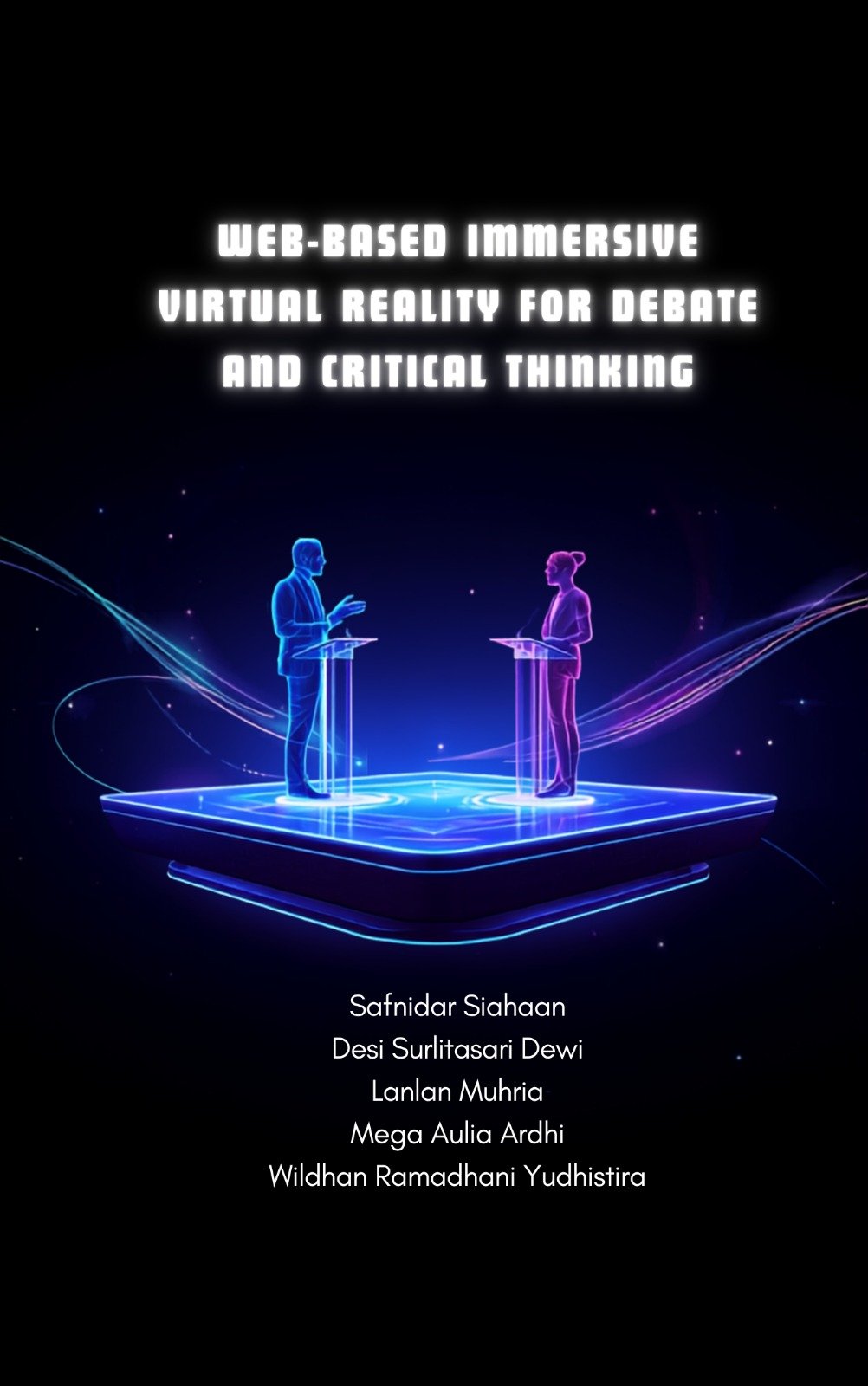
Web-Based Immersive Virtual Reality for Debate and Critical Thinking
Rp 65.000
Web-Based Immersive Virtual Reality for Debate and Critical Thinking is a practical guidebook to integrating immersive digital environments, structured debate, and artificial intelligence. The book introduces a Web-Based Immersive Virtual Reality (Web-IVR) approach that can be accessed through a web browser without requiring a head-mounted display. It guides learners through a sequence of debate activities involving affirmative and negative positions, argument preparation, reasoning, evidence, rebuttal, oral performance, reflection, and revision.
Local-culture-based topics are incorporated to connect debate practice with issues that are familiar and meaningful to students while encouraging them to examine those issues from different perspectives. A distinctive feature of the book is its integration with AI-supported formative feedback. Students are encouraged to review their speaking performance, examine transcripts, interpret feedback, and identify areas for improvement. Rather than replacing the role of the lecturer, AI is positioned as a supporting tool for repeated practice, self-reflection, and more independent learning.
| Author (s) | Safnidar Siahaan; Desi Surlitasari Dewi; Lanlan Muhria; Mega Aulia Ardhi; Wildhan Ramadhani Yudhistira |
|---|---|
| Language | English |
| ISBN | In process |
| Pages | 120 |
| Dimension | 15, 5×23 cm |



Reviews
There are no reviews yet.